Historic Sites Along The Hudson River in New York

This content may contain affiliate links. For more information, see our disclaimer.
The Hudson River in New York is lined with historic sites. From grand estates and presidential homes to artist retreats, these places offer a direct connection to the people who shaped the nation. This is definitely not a complete list, but instead a list of historic sites that I’ve personally been to. I plan to update it as I check out other historic sites along the river!
Octagon House

The Armour-Steiner Octagon House is located in Irvington, New York. It is the only known, fully domed octagonal residence and the only house which replicates the Donato Bramante’s 1502 Tempietto in Rome. The house is on the National Register of Historic Places and is recognized for its unique architectural design and historical significance. You’re able to tour the house, but reservations are required to access the grounds because it is a private residence.
Sleepy Hollow Lighthouse

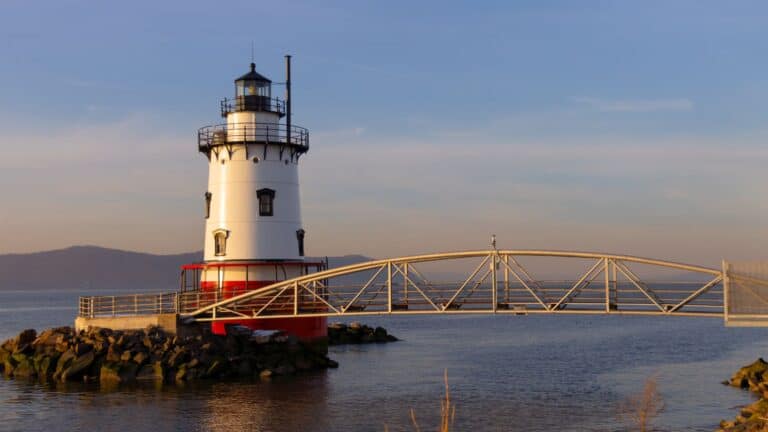
Tarrytown Lighthouse, also known as Sleepy Hollow Lighthouse, was built in 1883 to help boats navigate dangerous shoals in the area. It was a critical guide for Hudson River shipping, but it became unnecessary once the Tappan Zee Bridge was built. It was taken out of service in 1961. You can view this lighthouse by visiting Kingsland Point Park in Sleepy Hollow.
Wilderstein Historic Site

The Wilderstein Historic Site in Rhinebeck features a Victorian mansion you can tour. The estate was named “Wilderstein” which means “Wild Man’s Stone” in reference to a Native American petroglyph on the property. The home was originally built as an Italianate country home in 1852 for Thomas Suckley and his wife Catherine Murray Bowne. In 1888, it was remodeled and enlarged by Thomas’s son and his wife.
Locust Grove Historic Site

Locust Grove Historic Site in Poughkeepsie features an Italianate style villa designed in 1850 as a summer home for artist and inventor Samuel F. B. Morse. Fifty years later, William and Martha Young bought the house and renovated and expanded the house. When their daughter, Annette Innis Young, became the sole owner of the house, she realized the importance of her family in the area and worked to preserve this house and the others she acquired. She eventually created the not-for-profit educational foundation that preserves the estate as a museum today.
Olana State Historic Site

Olana State Historic Site in Hudson was the home of Hudson River School painter Frederic Edwin Church, who began developing the estate near the Hudson River in the 1860s. Church designed the main house with architect Calvert Vaux, drawing inspiration from Persian and Middle Eastern architecture as well as the surrounding landscape. After Church’s death, the property was eventually preserved and is now operated by New York State as a historic site and museum.
Saugerties Lighthouse

Saugerties Lighthouse in Saugerties was built in 1869. The lighthouse was built on a massive circular stone base sixty feet in diameter in the Hudson River. Today, the lighthouse is a landmark beacon that is both a living museum and a Bed & Breakfast that you can stay in. If you’re planning to visit this lighthouse, be sure that you check the tides. The lighthouse is only accessible during low tides. The walkway there floods over during high tides.
Home of Franklin D. Roosevelt National Historic Site

The Home of Franklin D. Roosevelt National Historic Site, known as Springwood, was the lifelong home of the 32nd U.S. president in Hyde Park, New York. Roosevelt was born there in 1882 and returned often throughout his political career, including during his presidency. The National Historic Site was established in 1945 after FDR’s death.
Rondout Light

Rondout Lighthouse in Kingston is the last of three lighthouses marking the entrance to Rondout Creek. Guided tours are offered of the interior of this lighthouse seasonally by the Hudson River Maritime Museum. While it’s only accessible by boat, you can view the lighthouse from land at Kingston Point Park.
Staatsburgh State Historic Site
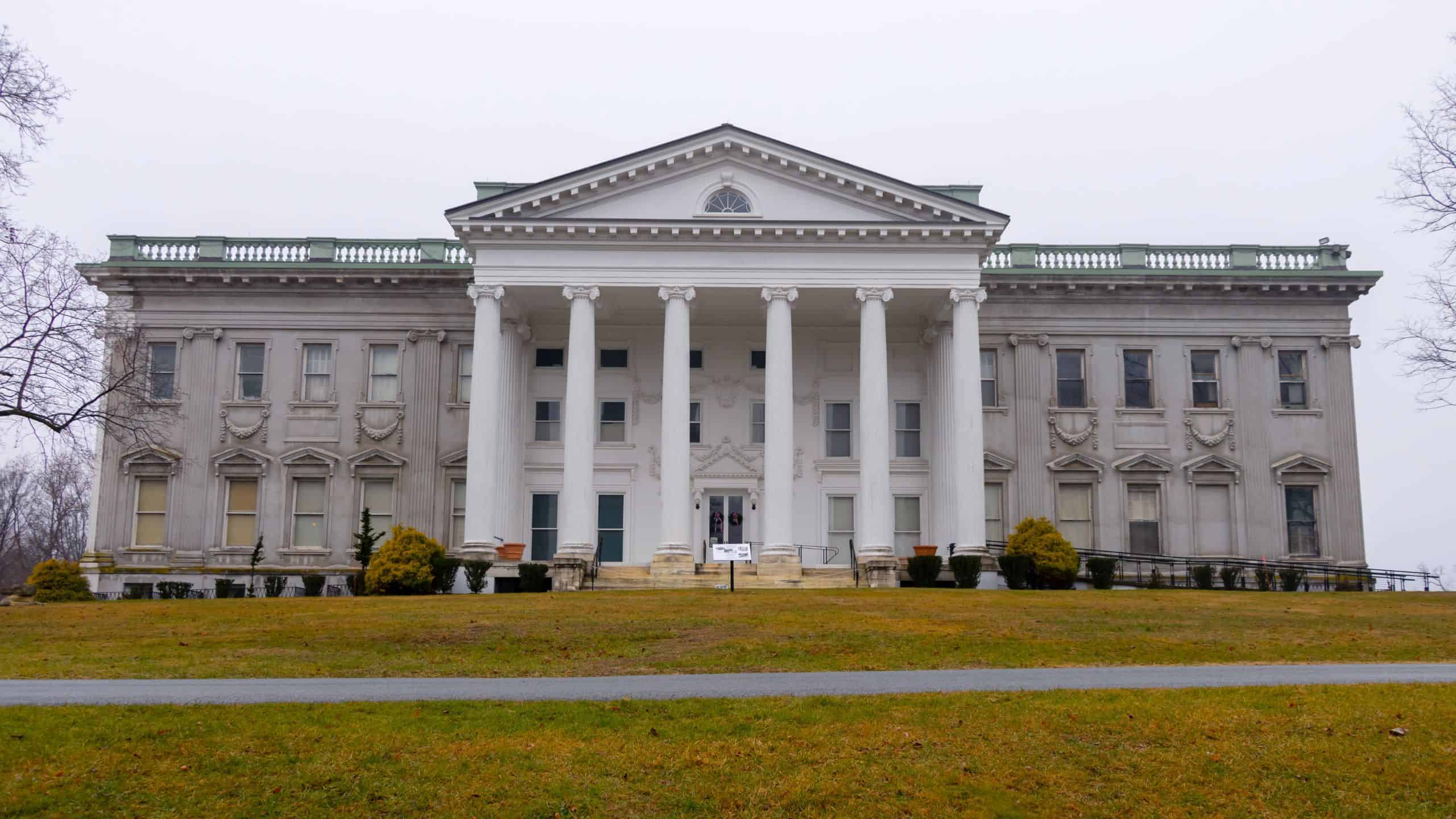
The mansion at Staatsburgh State Historic Site, known locally as Mills Mansion, is symbolic of the great country estates that were built in the nineteenth and early twentieth centuries to house America’s wealthiest families. The house was originally built in 1832. It started as a 25-room Greek Revival structure by Morgan Lewis and his wife, Gertrude Livingston. Later, Ruth Livington Mills inherited it. In 1896, Mills and her husband transformed the house into a Beaux-Arts mansion that had 65 rooms and 14 bathrooms.
Thomas Cole national Historic Site
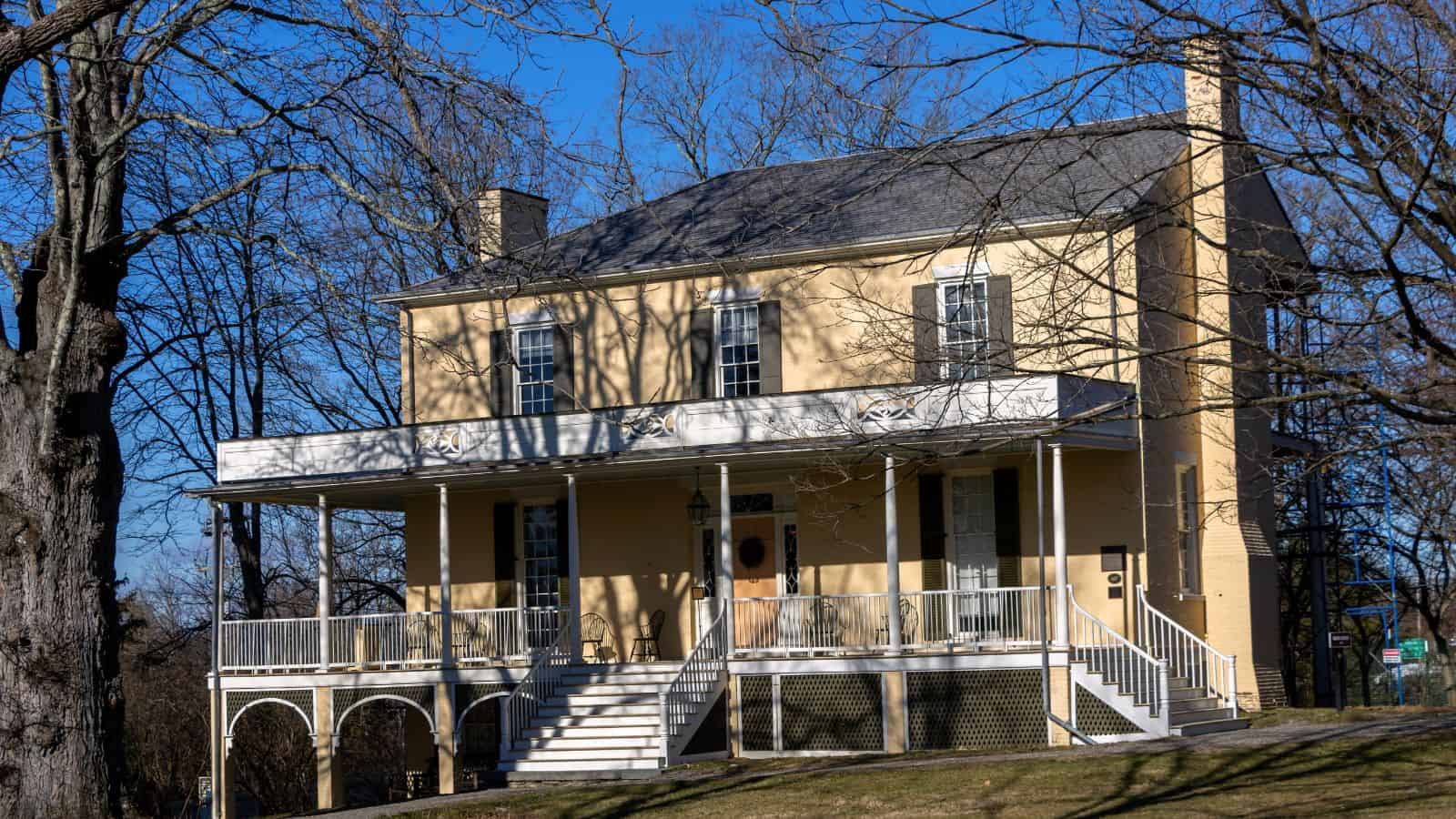
The Thomas Cole National Historic Site in Catskill offers insight into the life and work of the founder of the Hudson River School. The house and surrounding landscape reveal the artistic inspiration behind Thomas Cole’s paintings. Views of the Catskill Mountains help visitors understand the deep connection between the artist and nature.
Eleanor Roosevelt National Historic Site
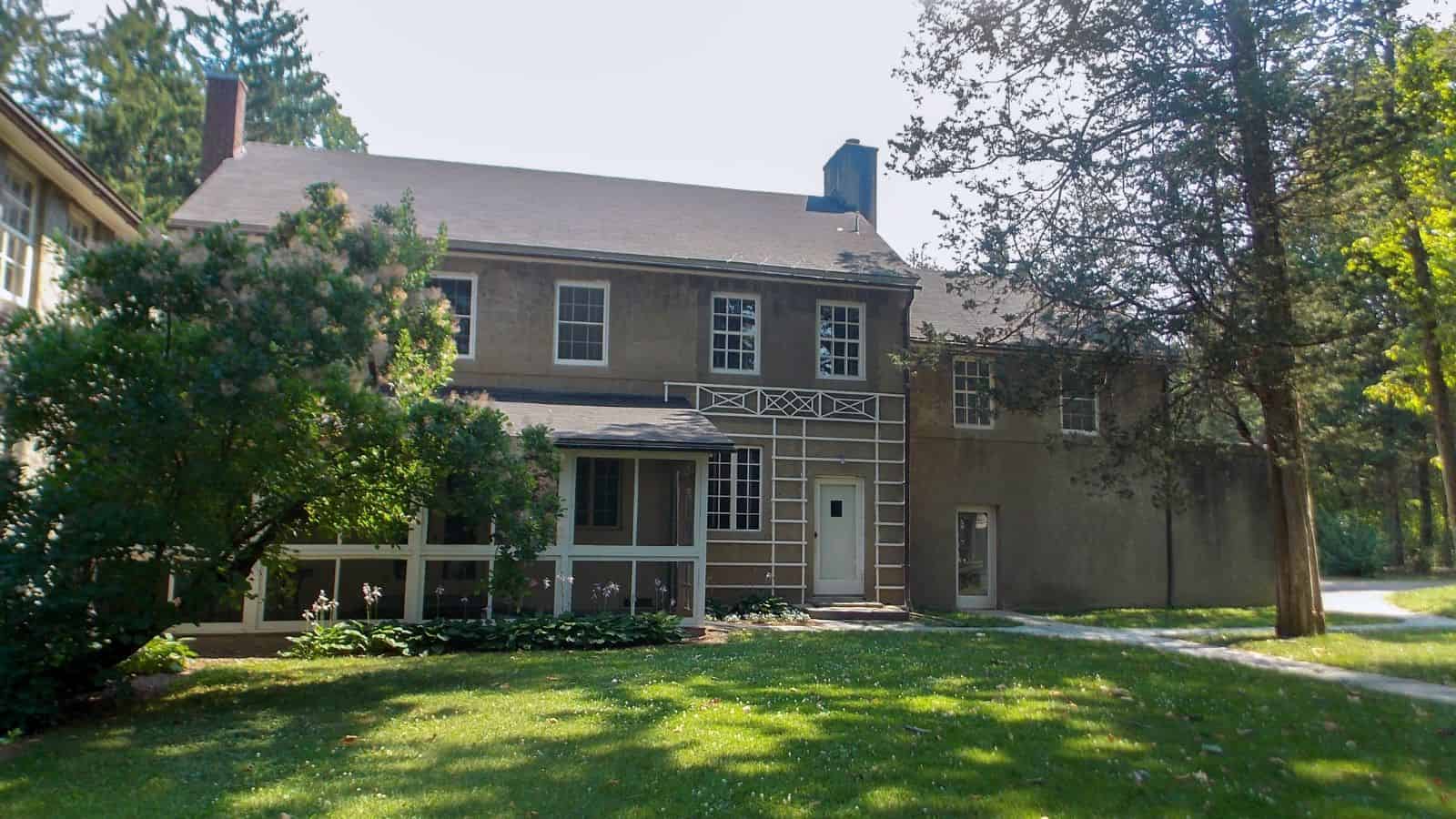
The Eleanor Roosevelt National Historic Site, known as Val-Kill, was the only home Eleanor Roosevelt personally owned and it was built in 1925 in Hyde Park. It served as a place where she pursued social activism, wrote extensively, and welcomed friends, political leaders, and activists. After her death in 1962, the property was preserved and later designated a national historic site to honor her legacy and work.
Vanderbilt Mansion National Historic Site
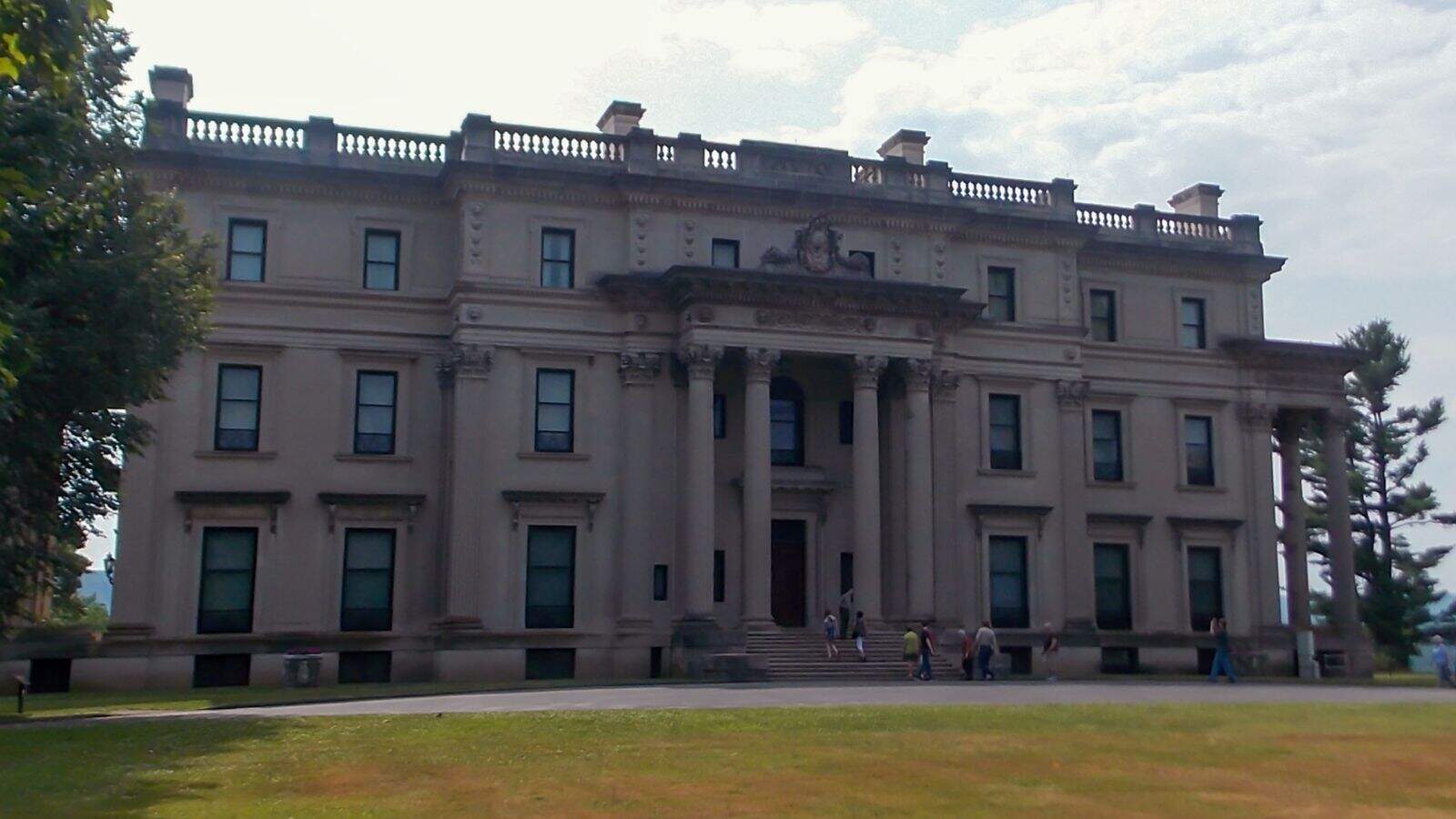
This mansion in Hyde Park was one of a portfolio of homes the Vanderbilts owned in New York City, Bar Harbor, Newport, and the Adirondacks. The house was designed for Frederick and Louise Vanderbilt, and it served as a seasonal residence. This well-preserved mansion has been open to the public to tour since 1940.